Skip to content

GiveRare JSTSA815B4 keyed padlocks, 4-pack

The keyed half of this hub’s second comparison — four brass-cylinder padlocks with eight keys, and the only pull figure published on the shelf.

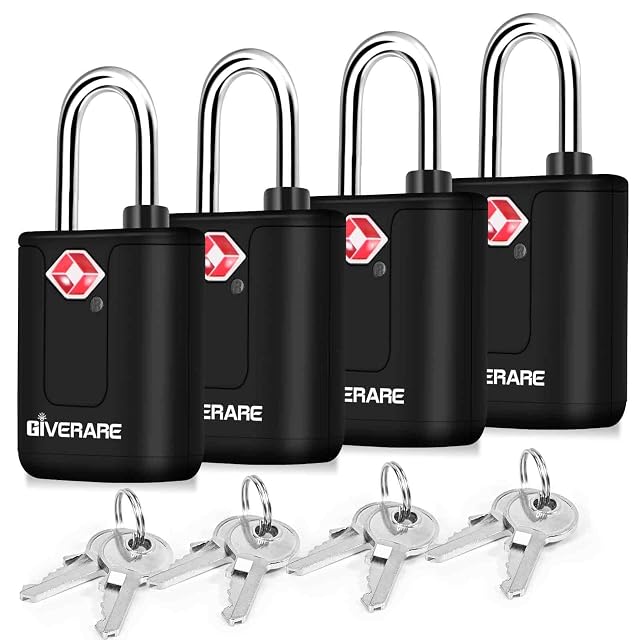
Four GiveRare keyed TSA luggage padlocks with their keys

GiveRare JSTSA815B4 keyed padlocks, 4-pack

The keyed half of this hub’s second comparison — four brass-cylinder padlocks with eight keys, and the only pull figure published on the shelf.

Amazon reference
B0DQ85WNF5
EAN
0717097196300
  • A key mechanism rather than a dial, which this hub names as one of its three comparisons
  • Publishes the shackle diameter, 0.12 in, and a stated pull resistance of 220 lb
  • Does not mention the red-diamond TSA marking, as none of the eight American listings here does

Best for: Someone who would rather carry a key than remember a code, with four bags to lock

≈ $8
Check price on Amazon
Specifications

Amazon reference
B0DQ85WNF5
EAN
0717097196300

This hub compares three things, and one of them is combination against small-key mechanisms. This is the keyed side: four padlocks with all-brass cylinders, hardened steel shackles of 0.12 in, and eight keys between them, keyed alike so one key opens the set.

The case for keys is simple and it is about what goes wrong. A dial cannot be lost but can be forgotten, and it seizes if grit works into it on a beach or a building site. A key is never forgotten and is lost — which on a locked case means cutting off the lock you bought to avoid your lock being cut. Eight keys for four locks is the maker’s answer: keep a set somewhere other than the bag.

The published figures are better than most on this shelf. A 0.12 in shackle, which is about 3 mm (0.12 in) and thin enough for standard zip pulls, and a stated 220 lb of pull resistance — the only load figure in this hub. Read it as a conveyor-belt rating rather than a security one: 220 lb is more than a zip will stand and nothing to a pair of cutters. The claim that the cylinder is “8-10 times stronger” names nothing to be stronger than, and the red-diamond marking this hub’s buying tip asks for is not mentioned here or on any of the eight American listings on this shelf.

Availability

Read on the day this page was built: $8 at the American Amazon shop.

Read from Keepa on the day this page was last revised; stock and price both move without notice.

Prices quoted in this text were read on 2026-10-07. The live price is at the top of the page.

What travelers ask

Key or combination?

It is a choice between two failure modes, and this hub compares them for that reason. A combination lock cannot be lost but can be forgotten, and a dial seizes if grit gets into it. A key cannot be forgotten but is lost — and a lost key on a locked case means cutting your own lock, which is exactly what a TSA lock exists to avoid. The practical answer is where the spare key lives: eight keys for four locks, with one set in a different bag, is the arrangement that makes keyed locks sensible.

What does 220 lb of pull mean?

That the shackle is stated to resist about 100 kg (220.5 lb) of pulling force before failing. It is the only load figure on this shelf and it should be read for what it is: a luggage lock is a deterrent and a seal, not a security device — 220 lb is more than a zip will take and far less than a bolt cutter. What it does tell you is that the shackle will survive a conveyor belt, which is the load these locks actually meet.

Do all four take the same key?

Yes — four locks and eight keys, which only makes sense keyed alike. That is the right arrangement for a traveler with several bags and the wrong one for sharing: anyone with one key opens all four. The combination version of the same lock, sold at the same price in a two-pack on this shelf, is the alternative where each lock can have its own code.

All tsa locks