Skip to content

The best trekking and large-capacity backpacks for 2026

Past roughly 50 liters a pack is genuinely carried on the hips rather than the shoulders, which is why the hip belt's padding and adjustment range matters more here than anywhere else in the network — a well-padded belt that transfers 70-80% of a loaded pack's weight off the shoulders makes a multi-hour carry manageable, where a thin, poorly adjustable belt puts that same weight directly on the back. We compare hip belt design, adjustable torso length systems (a genuine fit range rather than a single fixed size), and frame construction.

The models we recommend

  1. Best all-rounder

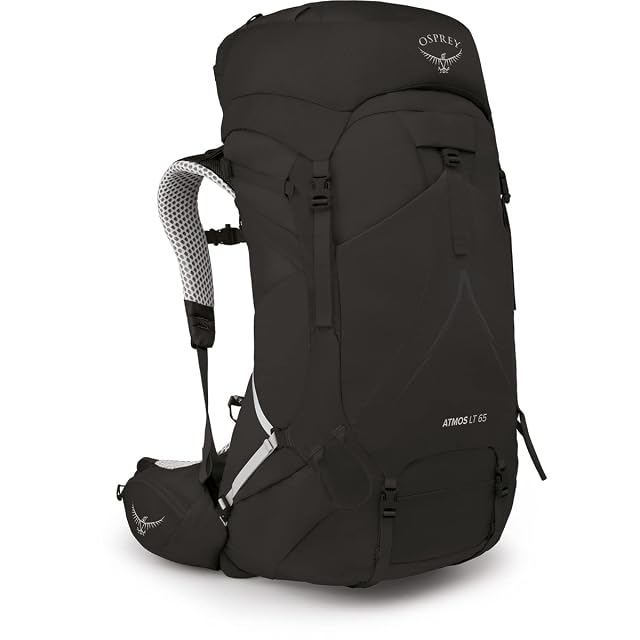
    Osprey Atmos AG 65 trekking backpack

    65 L · suspended mesh back · top tier

    A 65-liter trekking pack built around Osprey's Anti-Gravity suspended mesh back panel, aimed at genuinely long multi-day carries.

    Best for: Extended, multi-day treks where back ventilation and fit precision justify the higher price.

    8.9/10

    ≈ $310

For which need, in trekking backpacks

Going out self-sufficient for several days

The volume decides what kit you can take. On a bivouac, tent, sleeping bag and food consume most of the capacity.

Osprey Atmos AG 65

Walking for the day

A small volume forces you to take only the essentials and is carried without fatigue over a full day.

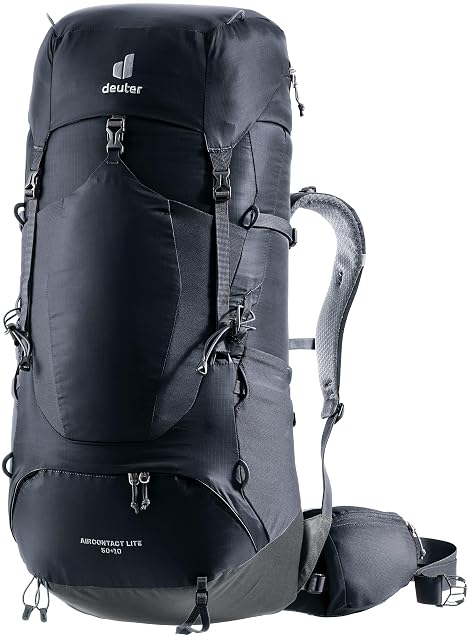
Deuter Aircontact Lite 50+10

Matching your back length

A pack sized for a longer back puts all the weight back on the shoulders. The back-length range stated in centimeters is the only figure that predicts how it carries.

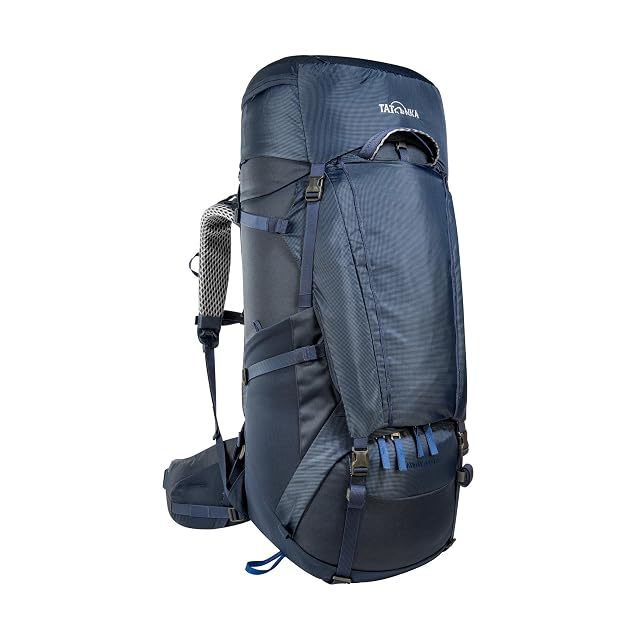
Tatonka Yukon 60+10

For whom, within trekking backpacks

Day walking
Water, a snack, an extra layer and a first-aid kit. The volume required is far smaller than people imagine.
Bivouac
Tent, sleeping bag and mat consume most of the volume. That is what tips the choice towards large packs.
Body shape
Back length counts for more than volume: a pack badly sized in length cannot be adjusted properly, whatever it cost.

What each advantage costs, on trekking backpacks

Volume against weight carried
A big pack always gets filled. Choosing smaller is the most effective way to set out lighter.
Carry system against lightness
A good carry system weighs more and transfers weight onto the hips. On a heavy load it is well worth the added grams.
Multiple pockets against weight
Pockets organize and add fabric, zips and grams. The lightest packs are the barest.

Before buying trekking backpacks

How do I choose a pack's size?

By back length, not by the person's height. That is the measurement that decides whether the carry system adjusts correctly.

How do I adjust a backpack?

Hip belt on the iliac crests and tightened first, then shoulder straps, then load lifters. The belt should carry most of the weight.

What volume for a bivouac?

Tent, sleeping bag and mat consume most of the capacity. The volume needed depends above all on how compact that kit is.

Where should heavy items go?

Close to the back and at shoulder-blade height. Weight held away from the back pulls backwards and unbalances every step.

Do I need a rain cover?

No pack is truly waterproof at the seams and zips. A cover and internal dry bags complement each other.

Is a big pack more versatile?

It always gets filled, whatever the outing. Taking a smaller one is the most reliable way to set out lighter.

How do I avoid rub points?

Correct adjustment and clothing without seams under the straps. A rub point declares itself after several hours, not at the start.

Should I try the pack loaded?

Without fail: an empty pack says nothing about how it behaves under load. Load it in the shop before deciding.

What to remember about trekking backpacks

Back length decides the pack, not the person's height — and a pack is tried loaded, never empty. The hip belt is tightened first and carries most of the weight, and taking a smaller pack remains the surest way to set out light.

A quick look at trekking backpacks

Trekking backpacks in one table

A characteristic joins the table when four bags in five give it. Below that, the column would say nothing useful.

ModelPriceCapacity
Deuter Aircontact Lite 50+10$23050 + 10 L
Osprey Atmos AG 65$31065 L
Tatonka Yukon 60+10$58060 + 10 L
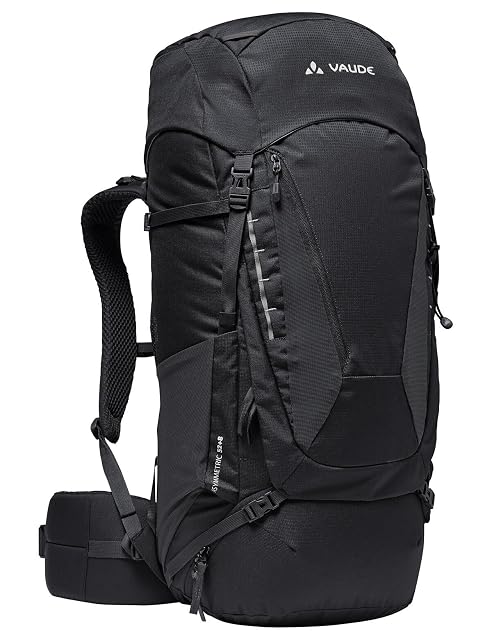
Vaude Asymmetric 52+8—52 + 8 L

Also worth reading on trekking backpacks

Where this is drawn from

Specifications: manufacturer sheets for luggage and travel gear and the matching Amazon product pages. Prices and availability: Keepa. Every figure in this table names its source.

How we assess trekking backpacks

Prices quoted in these summaries are dated readings. The live price is shown next to each product.