The 100 Wh cabin limit is set by regulation, not by the manufacturer
The best travel power banks for 2026
Most airlines follow an international safety rule permitting power banks up to 100 watt-hours in carry-on baggage without special approval, and larger capacities between 100 and 160 Wh commonly need prior airline approval — power banks above that are typically barred from flights entirely, checked baggage included. We compare stated watt-hour rating (not just the milliamp-hour figure most listings lead with, which requires a conversion to compare against the actual limit), charging speed, and the number of devices it can charge at once.
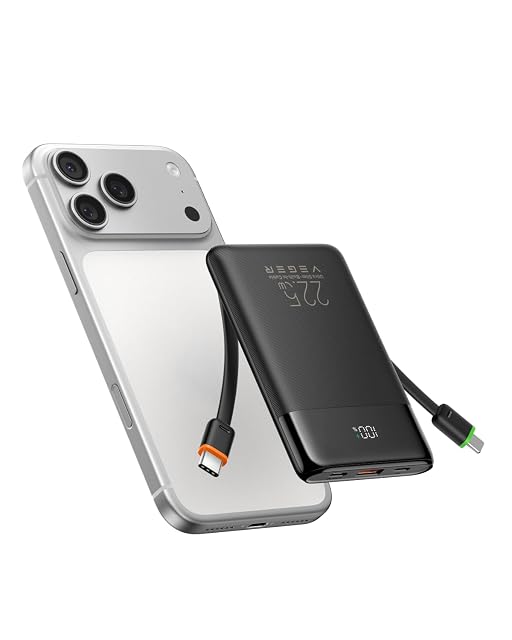
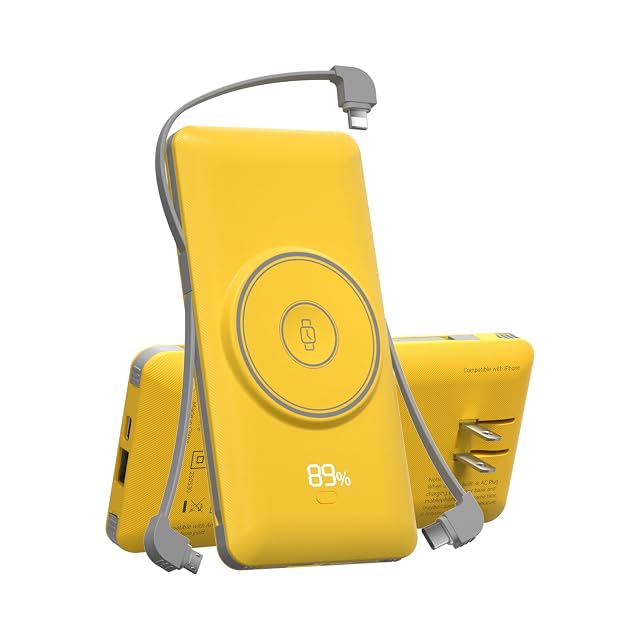
The cheapest bank on this shelf, and one of only two that tells you how much power is left when you charge four things at once.
Amazon reference
B0FCM85RXN
EAN
6977525751493
Publishes the shared total: four devices at once, 15 W between them — against a 22.5 W headline for a single device
Publishes the weight and all three dimensions: 180 g (6.3 oz), 6.35 oz, 4.57 by 2.83 by 0.66 in
Publishes no watt-hour figure, like every listing in the American half of this hub — by the formula in this shelf's buying tip, 10,000 mAh is roughly 37 Wh
Best for: A group charge where the honest figure is the shared one, not the headline
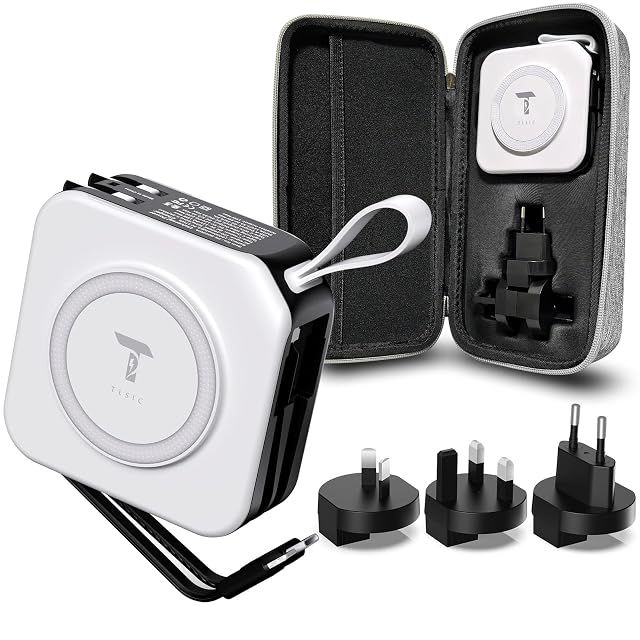
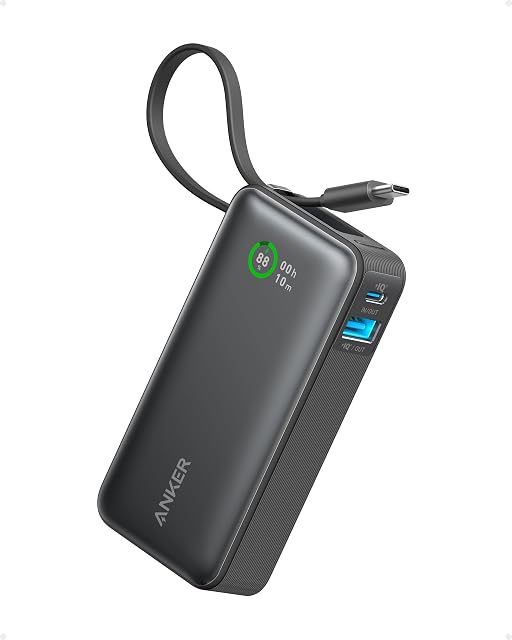
The only bank on this shelf whose charging claims state what charge they start from — and the one that argues hardest for a cable you can replace.
Amazon reference
B0DFLNL3XM
EAN
6975141098664
States the starting charge behind its percentage claims — iPhone 17 Pro Max to 76 per cent, Galaxy S25 Ultra to 84, iPad Pro to 60, in 30 minutes from 20 per cent
45 W, which covers tablets and some small laptops rather than phones alone
Publishes no dimension and no weight at all, while claiming to be 40 per cent smaller and 36 per cent lighter than "conventional chargers" it never identifies
Best for: Keeping a bank for years, where the cable is the part that will fail first
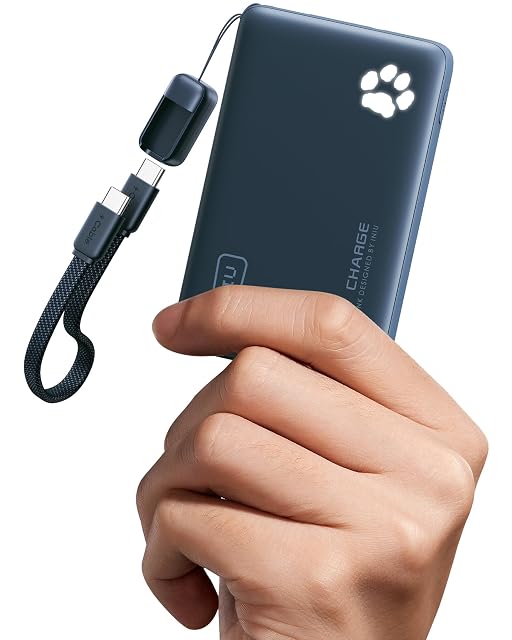
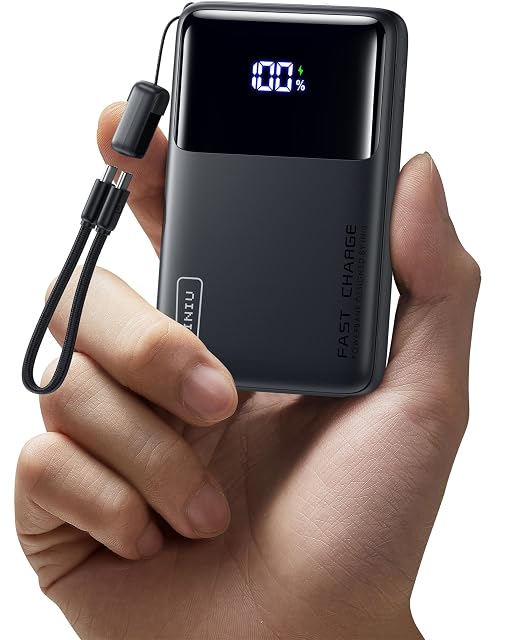
The INIU that publishes its dimensions and its weight, translates its capacity into four kinds of device — and names a different model number in its own second bullet.
Amazon reference
B0DC9PV394
EAN
6975141097889
Publishes all three dimensions and the weight: 4.4 by 2.7 by 0.7 in and 6.5 oz
A built-in phone stand, so the bank props the screen for a film or a map instead of lying under it
The second bullet calls the product "P55" while the reference is P61-E1 and the title names neither
Best for: A tray table, where a bank that props the phone up earns its place twice
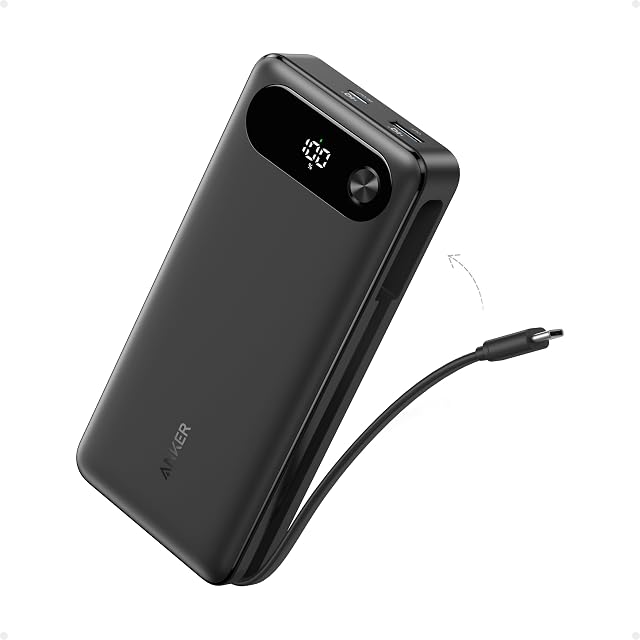
The only bank on this shelf above 10,000 mAh, the only one that charges a laptop properly, and the only one to publish both a shared total and a single-device maximum.
Amazon reference
B0CXDXP8VR
EAN
0194644043711
Publishes both figures that matter for multi-device charging: 87 W shared across three devices, up to 65 W to a single one
Twice the capacity of everything else on this shelf — 20,000 mAh, roughly 74 Wh by the buying tip's formula, still inside the 100 Wh limit
Says it is "also approved for airline travel" without publishing a watt-hour rating, and at roughly 74 Wh it is the closest bank on this shelf to the 100 Wh limit
Best for: A laptop and two phones on a long-haul day, where 10,000 mAh is not enough
Lithium batteries travel in the cabin and airlines set an energy ceiling, usually expressed in watt-hours. The stated capacity, converted to watt-hours, decides whether the pack boards.
A compact battery covers one phone recharge. The most common and lightest need.
Long trip
Several devices over several days call for a large capacity and therefore weight. A trade-off to make knowingly.
A battery that must stay in the cabin
Batteries must travel in the cabin, never in the hold. A safety rule, not a recommendation.
What each advantage costs, on travel power banks
Capacity against weight
Capacity and weight are proportional: there is no such thing as a large light battery. The weight carried is the real limiting factor.
Stated capacity against real recharges
Conversion losses mean a battery gives back distinctly less than its nominal capacity. The real number of recharges is below the theoretical figure.
Charging power against compatibility
Fast charging needs a protocol shared by the battery, the cable and the device. Without all three, charging happens at standard speed.
Before buying travel power banks
Can a battery travel in the hold?
No: lithium batteries must be in the cabin. A safety rule imposed by the airlines, with no exception.
Is there a maximum capacity on a plane?
Airlines set a limit in energy capacity, and very large batteries can be refused. Check before leaving.
Why do I not get the stated number of recharges?
Conversion losses distinctly reduce the energy actually delivered. The real figure is always below the theoretical calculation.
Do I need a particular cable?
For fast charging, yes: the cable has to support the protocol and the current. An old cable limits the charge with nothing to signal it.
Can the battery be left charging overnight?
Modern batteries manage the end of charge. A model with no compliance marking, on the other hand, is not an object to leave unattended.
How should an unused battery be stored?
Partly charged rather than full or empty, dry and at a moderate temperature. A battery stored empty for months may never recharge again.
The battery gets warm while charging — is that normal?
Slight warmth yes, significant heat no. A battery that swells must be taken out of service immediately.
Can a power bank charge a laptop?
Only if it delivers the voltage and power the laptop asks for, which rules out most compact models. The stated output power is the figure to compare, not the capacity.
What to remember about travel power banks
Lithium batteries travel in the cabin, never in the hold — a safety rule with no exception. Conversion losses mean you always get fewer recharges than the theoretical calculation, and a battery that swells is taken out of service immediately.
A quick look at travel power banks
Most affordable here: VEGER V1202, 10000 mAh 22.5 W, at $20.
There is no table here: these 9 listings publish no specification in common, so there is nothing a column could line up. Each product page says what its own maker put on the label.