Six devices at once, and no wattage figure anywhere
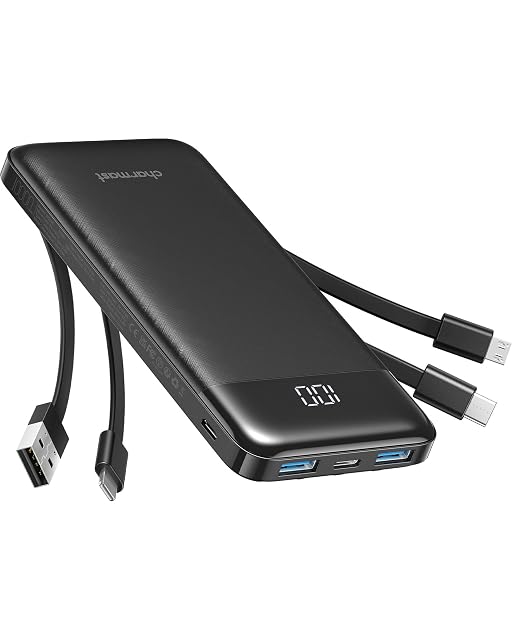
charmast W1148, 10000 mAh with built-in cables
The only bank on this shelf with no charging-speed figure of any kind — on a listing that gives its own cable count three different ways.
The case this listing makes is a good one. Three connector types built into the body — USB-C, iPhone, Micro-USB — three more ports on top, six devices at once, and three different ways to put power back in, so whatever cable is nearest at a hotel desk will do. Built-in cords cannot be left in a drawer in another city, which is the real failure of travel charging, and keeping a Micro-USB connector still covers older earbuds, reading lights and e-readers that the rest of the shelf has written off.
What is missing is the whole of the second thing this hub compares. There is no wattage on this page. Not a peak for one device, not a total for six, not an input figure for recharging the bank itself. Every other listing in the American half of this hub publishes at least one number — 20 W, 22.5 W, 45 W, 87 W — and this one offers “all-day power” instead. With six devices claimed and no total stated, there is no way to know what a sixth device would actually receive.
The cable count is the other thing to look at before buying, because the page gives it three ways. The title says four cables. The second bullet says four and then names three connector types. The first bullet says three built-in output cables plus three ports. The reading that makes all three true is three output cables plus a Micro-USB input counted as a fourth — which is a guess, and a buyer should not have to make it.
There is also no watt-hour rating, which is the figure the introduction to this page asks for and which no bank in the American half of this hub publishes. By the formula in the buying tip, 10,000 mAh at about 3.7 V is roughly 37 Wh, comfortably within the 100 Wh cabin limit; that arithmetic is ours. Unusually for this shelf, this page does not claim airline compliance either, which at least means it is not asserting a conclusion without the number.
Availability
Read on the day this page was built: $21 at the American Amazon shop.
Read from Keepa on the day this page was last revised; stock and price both move without notice.
Prices quoted in this text were read on 2026-10-07. The live price is at the top of the page.
What travelers ask
How fast does it charge?
The page never says. There is no wattage anywhere on this listing — not a peak figure for one device, not a shared total for six, not an input rating for recharging it. Charging speed is the second thing the introduction to this page compares, and this is the only bank in the American half of this hub that leaves it blank. Every other listing here gives at least a headline: 22.5 W, 45 W, 20 W, 87 W. Without one, "all-day power" is the only claim about performance on the page.
How many cables does it have?
The listing gives three answers. The product title says "Reinforced Built-in 4 Cables". The second bullet opens "Four built-in cables, zero lost cords" and then names three connector types — USB-C, iPhone and Micro-USB. The first bullet says "3 built-in output cables plus 3 extra ports". The most likely reading is three output cables plus a Micro-USB input counted as a fourth, which would make the title defensible and the enumeration incomplete. The point is that you cannot tell from the page what is in the box.
Built-in or detachable cables?
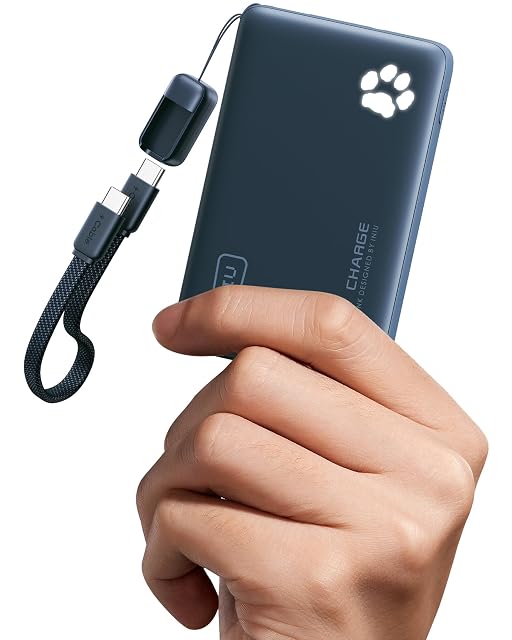
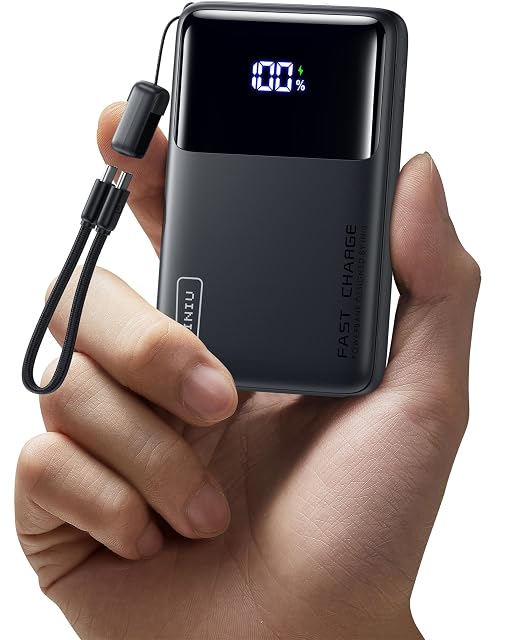
This page argues built-in, and argues it clearly: "Built-in cords stay permanently attached—unlike detachable ones that get left behind or snapped. Grab the power bank and the cable comes with you." The INIU bank below it on this shelf argues the opposite with equal confidence: a built-in cable "becomes useless if the cord breaks", where a detachable one can be swapped. Both are right about their own failure mode. The question is whether you are more likely to lose a cable or to wear one out — and if you keep a power bank for years, it is the second.