Ships with the three plug standards an American traveler meets
Tlsic PS-BOO3WA Powerpack Universal, 5-in-1
A power bank, a wireless pad and a travel plug adapter set in one object — at nearly the price of the 20,000 mAh bank on this shelf.
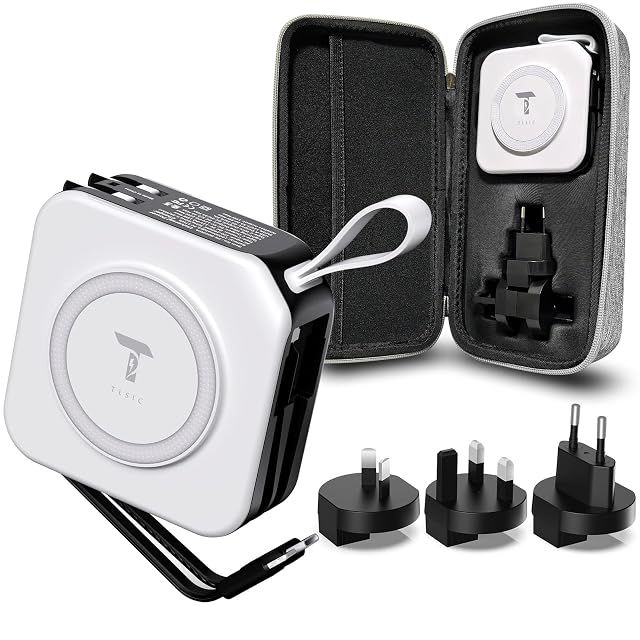
Counted honestly, this does replace three things in a bag. A 10,000 mAh battery, a Qi pad with a non-slip surface so a compatible phone charges by being put down on it, built-in cables for both Apple and USB-C devices, and an AC adapter with interchangeable EU, AU and UK plugs — which are the three socket standards an American traveler actually meets. No other product in this hub tries to be all of that, and for one object in a carry-on instead of three, there is a real argument.
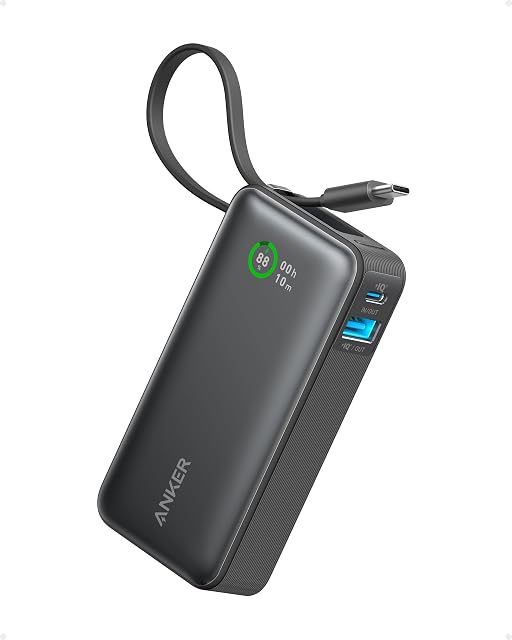
The argument runs into the price. Within a dollar of this sits the Anker on this shelf, with 20,000 mAh instead of 10,000 and 87 W across three devices instead of 20 W — double the capacity and several times the output power for the same money. What the Anker cannot do is charge a phone wirelessly or fit a British socket. So the question is narrow and answerable: are a plug adapter set and a wireless pad worth half the capacity and most of the speed? On a European tour with a phone and earbuds, possibly. On a trip where a laptop needs charging, no.
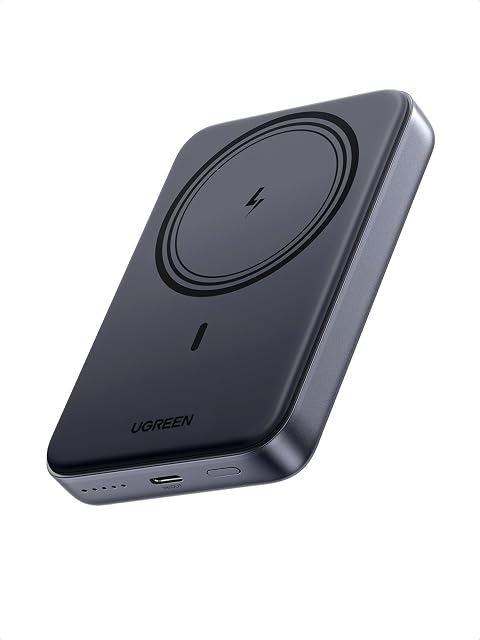
Two things are not published that should be. There is no wireless wattage at all, and Qi runs anywhere from 5 W to 15 W — the difference between a useful top-up at a café table and an overnight trickle. The other wireless bank on this shelf names its steps; this one names none, and 20 W over USB-C is the only speed figure on the page. And there are no dimensions and no weight, on a product whose whole case is that it takes up less space than its parts.
The regulatory number is missing too, as on every bank in the American half of this hub. By the formula in this shelf’s buying tip, 10,000 mAh at about 3.7 V is roughly 37 Wh, well under the 100 Wh limit — our arithmetic. Unlike most of this shelf, this page makes no airline claim at all, which is at least consistent. One small thing: the second bullet writes “lighting cable” where it means the Apple connector.
Availability
Read on the day this page was built: $69 at the American Amazon shop.
Read from Keepa on the day this page was last revised; stock and price both move without notice.
Prices quoted in this text were read on 2026-10-07. The live price is at the top of the page.
What travelers ask
What makes it five in one?
A 10,000 mAh battery, a Qi wireless pad, a built-in Apple cable, a built-in USB-C cable, and an AC adapter with three interchangeable plugs. Counted that way it genuinely does replace three objects in a bag — a bank, a wireless pad and a plug adapter set — which is the argument for it, and the only listing in this hub to attempt it. This hub has a separate shelf for travel adapters, and bringing one of them plus a cheaper bank is the comparison worth doing on price.
Is the price defensible?
Only on the basis of what it replaces. At within a dollar of the Anker on this shelf you get 10,000 mAh instead of 20,000, and 20 W instead of 87 W across three devices — so on capacity and speed alone this is the weaker purchase by a wide margin. What the Anker does not do is charge wirelessly or plug into a European, Australian or British socket. The question is whether the plug adapters and the wireless pad are worth half the capacity and most of the output power, and that depends entirely on the trip.
How fast does the wireless pad charge?
The page does not say, and that is the gap. Qi wireless charging runs anywhere from 5 W to 15 W depending on the coil and the phone, and the difference between those two is the difference between a useful top-up and an overnight trickle. The only speed figure on this listing is 20 W USB-C power delivery, which is the wired route. Of the banks on this shelf with wireless pads, the other one names its steps — 5, 7.5, 10 and 15 W — and this one names none.