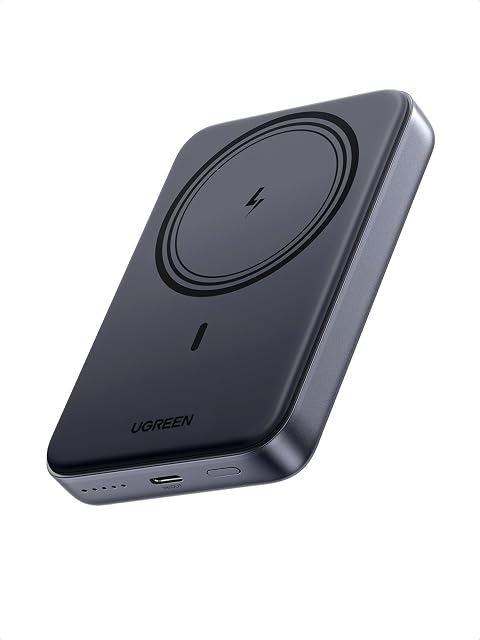
Publishes the shared total, not just the headline wattage
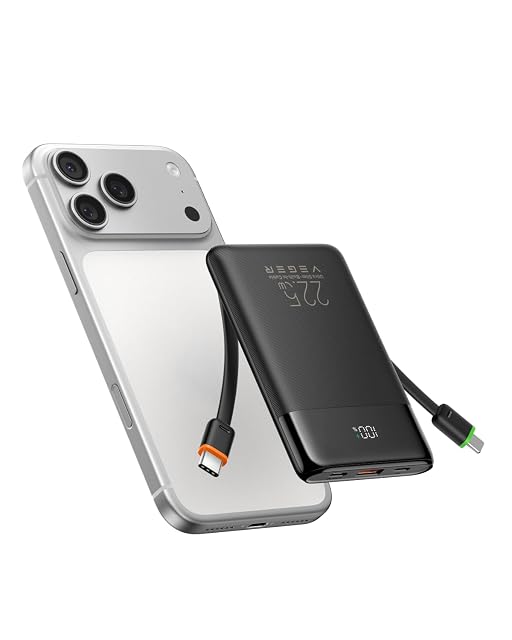
VEGER V1202, 10000 mAh 22.5 W
The cheapest bank on this shelf, and one of only two that tells you how much power is left when you charge four things at once.
Two things on this page are rare enough to carry the whole listing. The first is the shared total: four devices at once, 15 W between them, printed in the same bullet as the 22.5 W headline. That is under four watts a device, which is trickle charging — and it is the honest answer to the third thing this hub compares. Four banks on this shelf advertise four or six simultaneous devices, and only two of them publish what the devices actually get.
The second is a sentence admitting a downside. “Yes, power bank fast charging gets warm, that is physics, so we built in smart temperature control to keep battery safe.” A maker that names the drawback and then names the part that handles it is telling you more than one that claims nothing goes wrong. The rest of the specification is complete in the way the others are not: 180 grams, 4.57 by 2.83 by 0.66 in, four outputs with their individual maxima, three inputs, and a full recharge from empty in three hours.
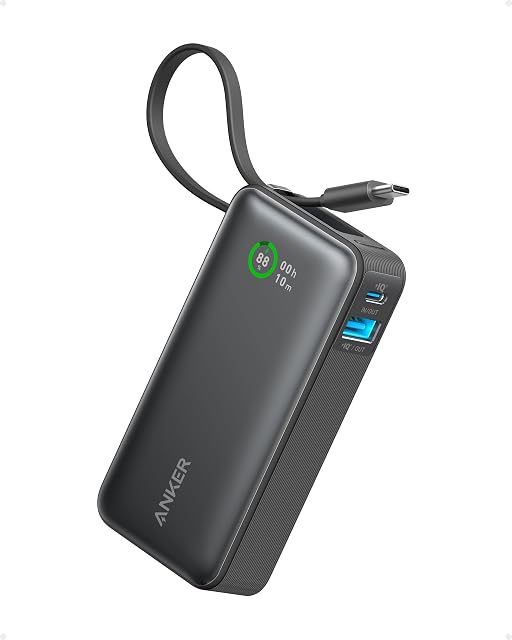
What is missing is the one figure the introduction to this page asks for. There is no watt-hour rating here, and the bullet instead says “Airline Approved Safety Battery Pack … Safe, Compliant, and travel ready for flights” — the conclusion without the number the rule is written in. By the formula in the buying tip, 10,000 mAh at about 3.7 V comes to roughly 37 Wh, well under the 100 Wh limit; that is our arithmetic, done because the page did not do it. Not one bank in the American half of this hub publishes it, and the Anker Nano published in the European half puts it in its specification line.
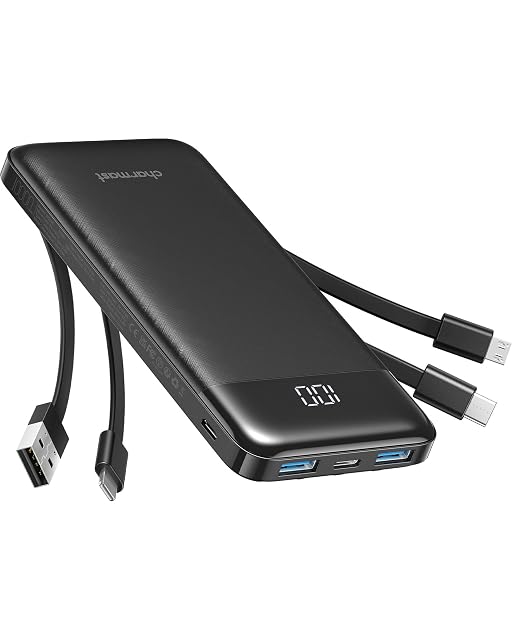
One last thing worth knowing before you choose between this and the bank above it. This one deliberately omits a Micro-USB cable and says so — “don’t pay for cables you’ll never need”. That one advertises a built-in Micro-USB cable as a feature. Same capacity, same price to within sixty cents, opposite reasoning, and nothing but your own devices to settle it.
Availability
Read on the day this page was built: $20 at the American Amazon shop.
Read from Keepa on the day this page was last revised; stock and price both move without notice.
Prices quoted in this text were read on 2026-10-07. The live price is at the top of the page.
What travelers ask
What is the shared total and why does it matter?
It is the power actually available when more than one thing is plugged in, and this hub compares the number of devices a bank can charge at once for exactly that reason. This listing says four devices and 15 W between them, under a 22.5 W headline — so four devices get under four watts each, which is trickle charging, not fast charging. Of the seven banks in the American half of this hub, four advertise four or six simultaneous devices and only two publish the total: this one and the 87 W bank at the bottom of this shelf. The other two name six devices and no wattage at all.
Is it airline legal?
Almost certainly, and the page does not give you the figure that proves it. The bullet says "Airline Approved Safety Battery Pack" and "Safe, Compliant, and travel ready for flights", and nowhere publishes a watt-hour rating — which is the number the rule is written in. Using the formula in this shelf's buying tip, 10,000 mAh at about 3.7 V works out near 37 Wh, comfortably inside the 100 Wh most airlines allow without approval. That arithmetic is ours, not the listing's. Not one of the seven banks in the American half of this hub publishes the figure, and five of them assert the conclusion.
Why leave out Micro-USB?
The listing argues it is dead weight — "We left out the outdated cables you'll never use" — and that dropping Micro-USB and a bulky USB-A cable is what makes the body 20 per cent lighter. That is a defensible choice and the page is unusual in explaining it. It is also the exact opposite of the bank above it on this shelf, which advertises a built-in Micro-USB cable as one of its four and argues that a cable you cannot lose is worth the bulk. Two listings on one shelf, same capacity, same price to within a dollar, opposite conclusions.