Aerolite Underseat backpack, maximum size
Soft profile · US carrier-sized
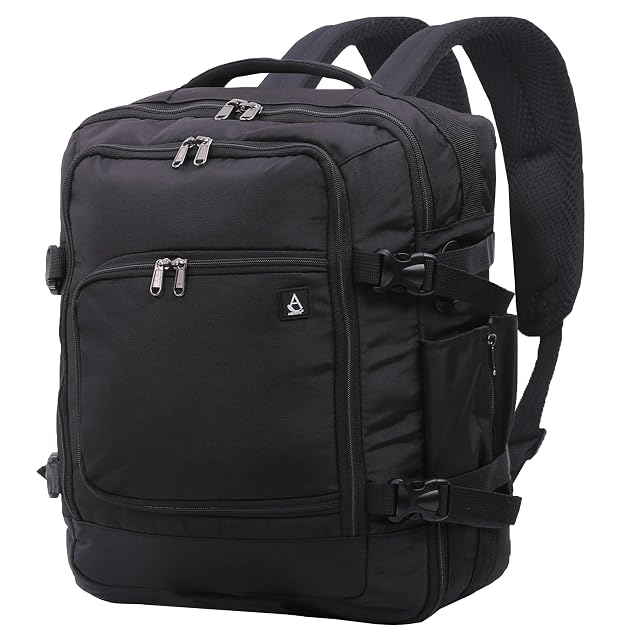
A soft-profile underseat backpack sized to the maximum personal-item allowance several named US carriers publish, listed with those airlines specifically in mind.
≈ $40
The exact under-seat allowance is set by the airline, not the bag · review
The slimmest bag on this shelf, the only one with a capacity and a laptop compartment — and the only listing in this hub that says what the bag is not.
The summing up The slimmest, best-specified bag on this shelf — and the only listing in this hub that tells you what it is not.
Four numbers and three denials make this the most useful page on the shelf. The numbers: 15.7 by 13 by 7.7 in, 24 liters in the main compartment and 26 in total with the laptop section, which is the only capacity figure published in the American half of this hub, and a padded compartment for a 15.6 in laptop, which no other bag here has. Seven point seven inches of depth is the slimmest on the shelf, and depth is what fails at a gate: the space under an economy seat is shallower than it is wide.
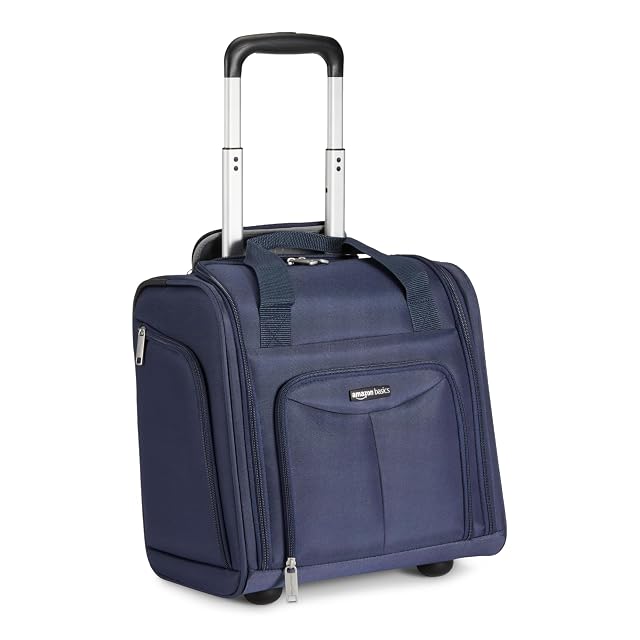
The denials are rarer. “This is not a backpack and has no shoulder strap.” “Built with 2 fixed-direction wheels, this bag rolls only when tilted — it is not a 360° spinner.” And a warning that overstuffing the front pocket can push the bag past the size limit. Three things a seller is under no obligation to tell you, on a shelf where another listing claims both the overhead bin and the space under the seat without naming a single carrier. It is the counterpart to the TPRC roller above, which names the airlines its bag will fail rather than the features its bag lacks.
The one claim to hold at arm’s length is the airline list. This page names Spirit, Delta, Southwest, Hawaiian, American and Allegiant and says the bag fits as a personal item on all six. The TPRC bag, three tenths of an inch deeper and an inch shorter, says it is not recommended for Spirit, Frontier or other ultra-low-cost carriers. Both publish their dimensions, both are sold as under-seat bags, and the conclusions are opposite. The carrier’s own current figure is the only thing that resolves it, which is exactly what the tag at the top of this page says.
The rest is sound: an all-aluminum telescopic handle, a fixed sleeve so it rolls one-handed behind a larger case, water-repellent fabric, reinforced stitching, a bottom panel and a three-year warranty. There is no empty weight published, and the same bag under the earlier reference is listed for several dollars less with a listing that publishes no capacity and names no airline at all.
Read on the day this page was built: $66 at the American Amazon shop.
Read from Keepa on the day this page was last revised; stock and price both move without notice.
Prices quoted in this text were read on 2026-10-07. The live price is at the top of the page.
| Amazon reference | B0D9LTHWBZ |
|---|---|
| EAN | 0710436468212 |
This shelf's buying tip asks for a bag that sits a centimeter or two under the carrier's limit on every dimension, because gate staff measuring by eye wave through a bag that is visibly smaller than the frame rather than one that matches it. At 7.7 in deep this is the slimmest bag in the American half of this hub — against 8 in, 9 in and 9.5 in — and depth is the dimension that fails first, because the space under an economy seat is shallower than it is wide. The listing adds the caveat that matters: do not overstuff the front pocket, because that is what pushes the bag past the limit.
This listing says yes and the bag above it on this shelf says no. Here the first bullet names Spirit, Delta, Southwest, Hawaiian, American and Allegiant and states the bag fits under the seat as a personal item on all six, at 15.7 by 13 by 7.7 in. The TPRC roller states it is not recommended for Spirit, Frontier or other ultra-low-cost carriers, at 14 by 15 by 8 in. Three tenths of an inch of depth and an inch of height separate them, and nothing on either page accounts for the opposite conclusions. The carrier's own published figure is the only thing that settles it.
Because the pictures and the category invite three wrong assumptions, and this page closes all of them. "This is not a backpack and has no shoulder strap." "Built with 2 fixed-direction wheels, this bag rolls only when tilted — it is not a 360° spinner." And the front pocket warning. That is three disclosures a seller is not obliged to make, on a shelf where another bag claims both the overhead bin and the space under the seat without naming an airline. It is the mirror image of the TPRC listing: that one names the flights the bag will fail, this one names the features it does not have.
Details checked on October 7, 2026.
A named personal-item allowance plus a 15.6 in laptop, rolled at the end of a wheeled case
Specifications: the manufacturer sheet for luggage and travel gear and the matching Amazon product page. Prices and availability: Keepa. Every figure on this page names its source.
Soft profile · US carrier-sized
A soft-profile underseat backpack sized to the maximum personal-item allowance several named US carriers publish, listed with those airlines specifically in mind.
≈ $40
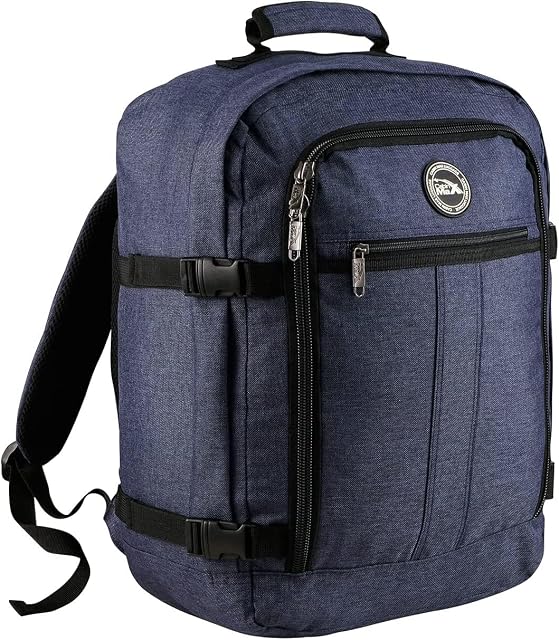
45×36×20 cm (17.7 × 14.2 × 7.9 in) · 30 L
A structured underseat backpack built to 45 × 36 × 20 cm (17.7 × 14.2 × 7.9 in), a size explicitly aimed at budget-airline personal-item allowances.
≈ $60
13.4 × 14.2 × 9.5 in including wheels · 2 in-line wheels · 9 pockets
The only bag on this shelf to publish a dimension that includes its wheels — and the deepest bag here as a result.
Best for: Organizing a lot of small things, on a carrier whose limit you have checked against a figure that includes the wheels
≈ $51