Twelve months per charge, the longest on this shelf
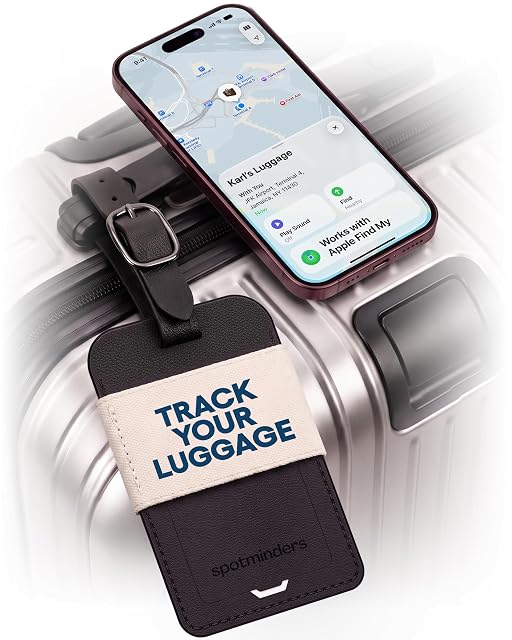
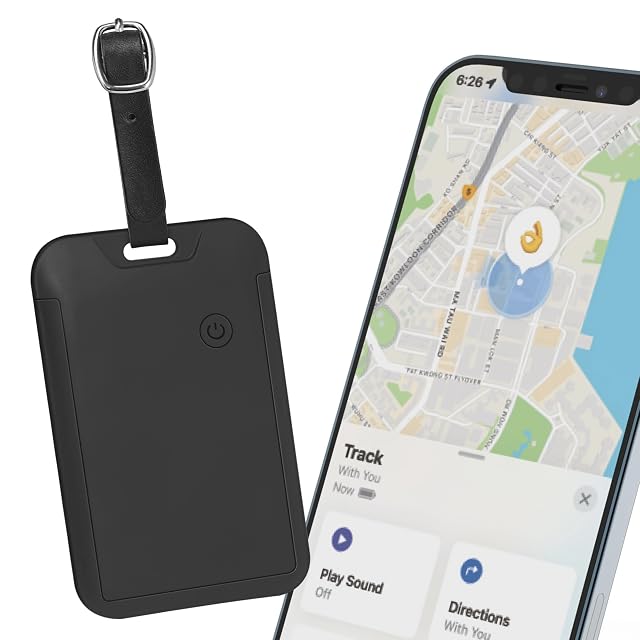
Spotminders LUGTAG_1 leather Find My luggage tag
The longest battery life on this shelf by a clear margin, in the slimmest leather tag here — with a card slot that keeps your address off the outside of the bag.
A year between charges is the headline and it is the right one. On this shelf the rechargeable devices claim four months, 120 days, six months, six months and eight months; this one claims twelve, and puts the exact battery level in the Find My app so the figure is watched rather than trusted. It charges on any Qi or MagSafe pad, so there is nothing to buy if a phone charger already exists in the house, and no coin cell to carry.
The second number is the thickness: 4.6 mm (0.18 in), the only one published on this shelf. That matters because an external tag spends its life on a conveyor belt, and the thicker the holder the more it catches, rattles and snags — the listing makes the comparison against bulky plastic AirTag holders, and the published figure is what lets you check it. The leather is litchi-grain, which is a finish rather than a specification, and the body is scratch-resistant.
The card slot is the part worth paying attention to. A tracker answers “where is my bag” and a contact card answers “whose bag is this”, and the two are not interchangeable: a handler who finds a suitcase in the wrong city needs a name, not a Bluetooth identifier. Putting the card in a slot rather than printing it on the face means the information is available to someone who looks and not to everyone standing at the carousel — which is exactly the trade-off this hub’s luggage-tag shelf is about.
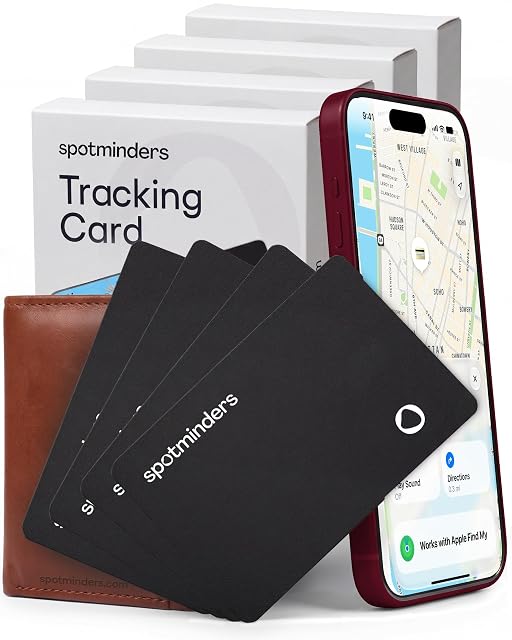
Two reservations. IPX4 is spray resistance, and the same maker’s tracking card further down this shelf claims IP68 with a stated meter of immersion for half an hour, so this is the weaker rating from a company that can clearly publish a stronger one. And nothing else is measured: no sound level and no Bluetooth range, where the same maker publishes 100 dB and 300 ft on the card. For several times the price, the leather tag at the top of this shelf gives you two ID cards, a screw-lock strap and three published dimensions, with six months of battery instead of twelve.
Availability
Read on the day this page was built: $56 at the American Amazon shop.
Read from Keepa on the day this page was last revised; stock and price both move without notice.
Prices quoted in this text were read on 2026-10-07. The live price is at the top of the page.
What travelers ask
How much does twelve months actually buy you?
One charge a year instead of two or three, and more importantly a tracker that is never flat when you reach for it. On this shelf the rechargeables run four months, six months, six months, eight months and 120 days; this one claims twelve, and shows the exact level in the Find My app so you are not guessing. The alternative philosophy is on the four-pack further up the shelf, which uses a replaceable coin cell lasting a stated year and can be fixed in any supermarket rather than charged.
Why does 4.6 mm (0.18 in) matter?
Because a tag lives on the outside of a bag going down a conveyor. A thick plastic holder catches on belts, rattles against the shell and snags in the gap where bags are tipped; 4.6 mm (0.18 in) is thin enough to lie flat against the case, which is the point the listing makes against bulky AirTag holders. It is the only thickness published on this shelf, and it is the dimension that decides whether the tag survives the trip rather than being torn off it.
What is the card slot for?
The half of the job a tracker cannot do. A tracker tells you where the bag is; a contact card tells the person holding it where to send it, and a slot rather than a printed panel means the information is there for someone who opens the tag and not on display to everybody on the carousel. That is a real distinction on a luggage tag, and this hub has a separate shelf for plain tags where the same trade-off between a visible address and a hidden one is the whole subject.