Skip to content

The best checked luggage for 2026

Checked luggage lives or dies on two things a cabin case rarely has to worry about: empty weight eating into a baggage allowance, and a handle built to survive being wheeled at an angle while genuinely full.

At medium and large sizes, the telescoping handle starts to matter as much as the shell itself — a case packed close to its weight limit puts real sustained load on the handle every time it’s wheeled rather than lifted, and a handle built for a lighter case can develop play over years of heavy use.

Expansion zips are genuinely useful for the trip home, adding roughly 15-20% more volume, but they change the case’s measured dimensions in the process — worth checking against a specific airline’s checked-baggage size limit before relying on it outbound.

Which case fits your trips?

You fly with an airline weight limit
Empty weight matters as much as capacity, because it comes straight off your allowance.
You pack fragile things
A hard shell, and packing that keeps fragile items away from the outer walls.
You travel to varied destinations
Wheel quality and repairability matter, because rough ground destroys wheels first.
You fly rarely
A conventional case and reasonable expectations. Checked luggage takes a beating that no case escapes entirely.

Picking by the journey

Family and holiday travel

The commonest use. Capacity and easy handling matter more than anything sophisticated.

Long trips

Where internal organization, compression straps and a second compartment earn their place.

Moving equipment

A hard shell and, for anything valuable, proper padding rather than trust in the case alone.

As part of a pair

Checked case for clothes, cabin bag for everything you cannot afford to lose.

What counts once the case is full

Empty weight against your allowance
The heavier the case, the less you can pack. On a strict weight limit this matters more than the stated capacity does.
Hard shell or soft
Hard shells protect and resist water; soft cases expand and absorb impacts differently. Both survive baggage handling; both get scuffed.
Wheels and their replaceability
Wheels fail first on checked luggage. A case whose wheels can be replaced outlives one whose cannot.
Zips versus latches
Zips are lighter and flexible; latches with a frame are more secure and heavier. Zips are the commonest failure point on a full case.
How identifiable it is
A black case on a carousel is every other black case. Color or a distinctive marker saves time and prevents the wrong bag going home with someone.

Which figure for which journey

Your priorityWhat to chooseWhat you give up
Maximum packing weightThe lightest caseSome protection
Protecting contentsHard shellWeight and rigidity
Long lifeReplaceable wheelsFewer models
Finding it quicklyA distinctive colorNothing

The mistakes travelers make

Buying on capacity alone
A large case tempts you into an overweight bag. Capacity beyond your weight allowance is capacity you cannot legally use.
Assuming a lock protects contents
Checked luggage locks deter casual opening. They are not security, and airport authorities can open a TSA lock regardless.
Packing valuables in the hold
Electronics, documents, medication and jewelry belong with you. A checked bag can be delayed, and sometimes is.
Over-packing to the seams
Zips fail under strain more often than they fail with age. A case packed to bursting is a case that opens on a carousel.

By the traveler you are

The family traveler
Capacity, a light shell and a color they can spot from across the hall.
The frequent flyer
Replaceable wheels and a case they know how to pack to the weight limit exactly.
The occasional traveler
A conventional case and a luggage tag inside as well as out.

Wheels, zips and how long a case lasts

Checked luggage lives a harder life than any other bag you own. Wheels wear, telescopic handles bend, and shells scuff, and none of that is a defect. What determines how long a case lasts is whether its wheels and handle can be replaced.

  • Check that wheels and handle are replaceable, and keep the part references.
  • Clean grit from the wheels after gritty or salted ground.
  • Do not store the case packed; the lining and shell hold moisture.
  • Empty the case fully between trips: forgotten liquids leak in a hold.

Safety

A checked bag is out of your sight and out of your control.

  • Never pack lithium batteries, power banks or e-cigarettes in the hold; airlines prohibit it.
  • Keep medication, documents and electronics in your cabin bag.
  • Put your contact details inside the case as well as on the outside tag.
  • Photograph the packed case before you check it in, which helps considerably with a claim.

The selection, and the reasons

What travelers ask

Does an expandable case ever cause problems?

It can if the expanded size is what gets checked in — some airlines measure a case at its largest dimension, expansion included, so it's worth packing close to the base size outbound and saving the expansion for the return leg with souvenirs or purchases.

How much does empty weight actually matter?

More than most buyers expect. A case that weighs 4.5 kg (9.9 lb) empty rather than 3 kg (6.6 lb) has already used a full extra kilogram of a typical 23 kg (50.7 lb) checked allowance before a single item is packed.

How big a checked case do I need?

Big enough for what you pack and no bigger, because capacity beyond your weight allowance cannot legally be used. Empty weight matters as much as volume.

Hard shell or soft?

Hard shells protect contents and resist water; soft cases have exterior pockets and give a little. Both survive baggage handling and both get marked.

Do luggage locks actually protect anything?

They deter casual opening and no more. Airport authorities can open a TSA-recognized lock, which is the point of the design.

What should never go in the hold?

Lithium batteries and power banks, which airlines prohibit, plus medication, documents and electronics you cannot afford to have delayed.

Why do wheels break first?

They carry the load over rough ground with grit in the bearings. It is normal wear, which is why replaceable wheels matter more than the shell material.

How do I stop my case being taken by mistake?

A distinctive color or marker, and contact details inside the case as well as on the external tag, which comes off more often than people expect.

Each case, and the trip it was packed for

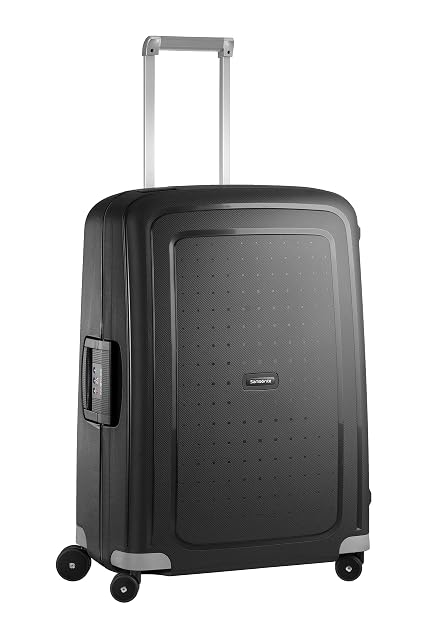
Samsonite S'Cure Spinner 69 · $385

Packed for: Travelers who already trust the S'Cure cabin case and want the matching checked size.

Biggest strength: Same impact-flexing polypropylene shell as the cabin-size S'Cure

Biggest weakness: No expansion zip, so capacity is fixed at 79 L

Read the full review →

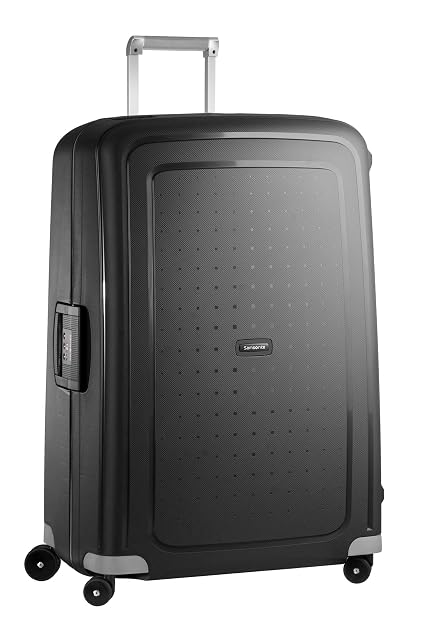
Samsonite S'Cure Spinner 81 · $460

Packed for: Extended trips, relocations, or checking luggage for more than one person in a single case.

Biggest strength: 138 L capacity covers an extended trip or checked luggage for two

Biggest weakness: Empty weight is high enough to eat meaningfully into a checked-baggage allowance

Read the full review →

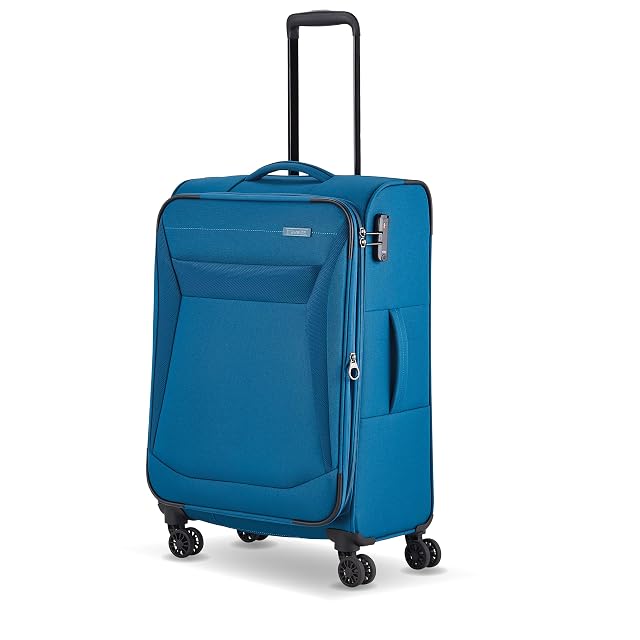
Travelite Chios Medium

Packed for: Occasional travelers prioritizing low weight and price over long-term ruggedness.

Biggest strength: Lightest empty weight confirmed among the medium cases in this hub

Biggest weakness: Shell offers less impact resistance than the Samsonite or Delsey options

Read the full review →

What to pack with it

Straps, locks and spares from the same aisle, at the price we recorded. Check they fit the case you pick before ordering: it depends on the shell and the part number, which the listing states.

Short answer

Pairings that help you choose

Case against case, where that comparison already exists on this site.

How this page came together

The cases listed come from the catalog of this site. Specifications are the published ones, from the maker and from Amazon; prices are the Keepa figure on the date below, and both shift. Ranking follows declared specifications, the balance of stated strengths and stated limits, and price. Nothing here has been packed or flown by us, and no page claims otherwise.

Last checked on

Prices quoted in these summaries are dated readings. The live price is shown next to each product.

The tool we use ourselves

Chosen your tool? Now buy it at the right price.

Hardside cases and travel backpacks swing by thirty dollars or more across the year, and the biggest "discounts" often land at prices the same model sold for six weeks earlier. UniverTrack tracks the real price history across retailers, spots fake reductions, and alerts you when it is genuinely the moment to buy.

Real price historyBuy-now alertsAI buying assistant
Try free for 14 days →
No commitment · Cancel in one click · 5 languages