A half cover, and both sizes published
Ovener Silicone tags with name card, 2-pack
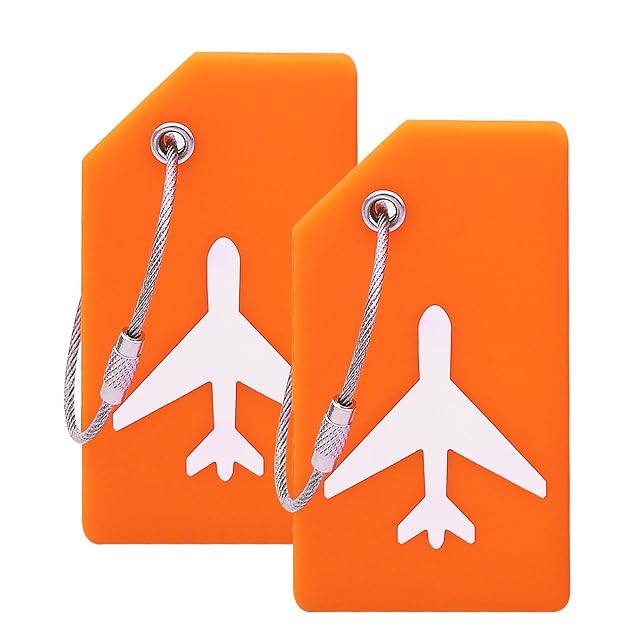
A plain silicone tag that publishes the tag size, the card size and exactly how much of the card the cover hides — half of it.
This is the plainest tag on the shelf and one of the better-measured. Three and a half by two inches for the tag, 3.4 by 1.8 for the name card, and a cover described exactly as what it is: a half cover, hiding half the card and leaving the rest readable. Three tags on this shelf describe their cover as partial rather than full, and those are the ones whose claim can be checked by looking at it.
The practical arrangement follows from the figure. Half of a 3.4 by 1.8 inch card is about 3.4 by 0.9 inches of visible space, which takes a name and nothing more — so you put the name on the exposed half and the phone number underneath. That is this shelf’s buying tip, implemented by the shape of the product.
Silicone is the right material for the job and the listing says why: it bends without breaking, which is what a tag does when a conveyor roller catches it. The leather tags on this shelf look better and scuff; the rigid PVC tag survives by being stiff enough not to give. For a bag checked twenty times a year, silicone asks least of the owner. The card is written with an ordinary ballpoint, which means no printing, no label and no app — and also that the writing is as permanent as the ink you used.
What the page does not publish is the part the introduction to this page says to check first. “Steel loops” is the whole of the attachment description: no diameter, nothing about how the loop passes through the tag, and no mention of a grommet — the reinforced eyelet that stops a tag tearing around its own hole. One listing on this shelf names that part, and it is the only one in this hub to do so. Two tags also cost what a ten-pack costs further down this shelf, so this is a purchase for the measurements rather than the arithmetic.
Availability
Read on the day this page was built: $7 at the American Amazon shop.
Read from Keepa on the day this page was last revised; stock and price both move without notice.
Prices quoted in this text were read on 2026-10-07. The live price is at the top of the page.
What travelers ask
How much does a half cover actually cover?
Half the card, which the listing says in plain words rather than implying more. On a 3.4 by 1.8 inch card that leaves roughly 3.4 by 0.9 inches readable, which is enough for a name and not much else — so the practical arrangement is a name on the exposed half and a phone number on the hidden one. Of the nine tags on this shelf, seven have a cover of some kind, and three of those describe it as partial or half rather than full. The honest ones are the ones to trust: a tag that claims to hide everything and shows a corner is worse than one that tells you where the line is.
Does silicone outlast leather?
They fail differently, and this hub compares the two directly. Silicone bends out of the way of a conveyor roller and springs back, shrugs off rain, and goes on looking the same for years; leather scuffs, stiffens when it gets wet repeatedly, and looks better while it lasts. Rigid PVC, which one tag on this shelf uses, survives by being strong rather than flexible. For a bag that is checked twenty times a year, silicone is the material that asks least of you.
What is not on the page?
Anything about the loop. The introduction to this page names strap durability as the first specification to check, and this listing says "steel loops" and stops — no diameter, no description of how the loop passes through the tag, and no mention of a grommet, which is the reinforced eyelet where a tag tears. One tag on this shelf publishes a reinforced all-metal grommet, and it is the only one in this hub to name that part at all.