A steel cable rather than a shackle, with tracking inside the body
Relvo R101 smart TSA cable lock with Find My
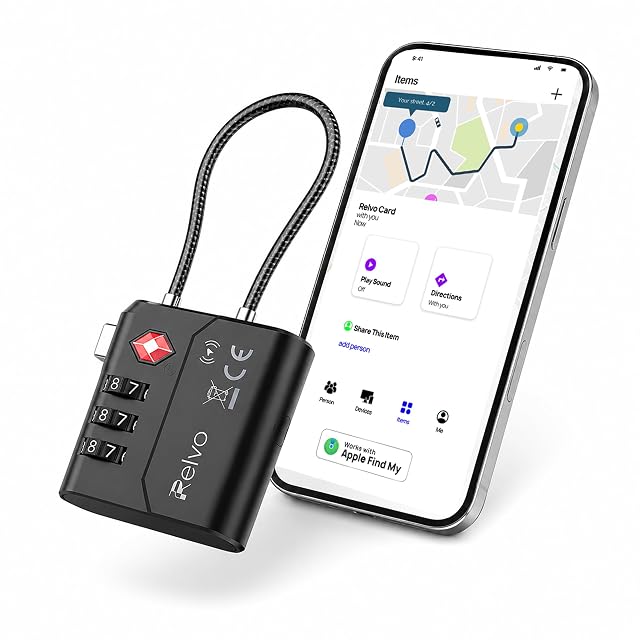
The cable version of a smart lock: tracking and a TSA combination in one body, on a flexible steel cable that goes where a shackle will not.
This is the cable version of the smart lock idea: a TSA combination lock with an Apple Find My tracker inside it, closed by a flexible steel cable rather than a rigid shackle. The cable is the real distinction and it is a good one — this hub’s own lock shelf makes the same point, that a shackle closes two zip pulls and a cable threads a small zip hole, a locker door, a duffel handle or a bag of sports kit. One object locks the bag and tells you where it is.
The charging is the other sensible choice. USB-C means no coin cells to carry and no wireless pad to own, where two of the rechargeable tags on this shelf state outright that no charger is in the box, and a USB-C cable is already in your bag. A hundred and twenty days is about three charges a year, which is the shortest rechargeable life here — the other devices claim six months, eight, and up to twelve.
What the page will not tell you is anything measurable. No cable length, no cable diameter, no water rating, no sound level, no Bluetooth range. The length of the loop when locked is the figure this hub’s lock shelf identifies as the one that decides what a cable lock can actually go round, and it is missing. Five bullets, and all five are written about confidence, peace of mind and traveling smarter rather than about the object.
The omission that matters most is the failure mode. The other tracking lock on this shelf says plainly that its battery is needed only for the Find My connection and that the lock still works by hand when the cell is dead. This one describes the charging and stops. A combination mechanism almost certainly works unpowered — but on a device you are about to lock your suitcase with, before a flight, the listing is where that should be said. And for context: a plain cable-style TSA lock on this hub’s lock shelf costs a quarter of this.
Availability
Read on the day this page was built: $30 at the American Amazon shop.
Read from Keepa on the day this page was last revised; stock and price both move without notice.
Prices quoted in this text were read on 2026-10-07. The live price is at the top of the page.
What travelers ask
Cable or shackle?
A cable goes round things a shackle cannot. This hub's lock shelf makes the same comparison: a rigid shackle closes a pair of zip pulls and nothing else, while a flexible steel cable threads small zip holes, awkward pulls, a locker door, a duffel handle or a bag of sports gear. That is the argument here, and the gap in it is that the page never publishes the cable length or its diameter — and on the lock shelf in this hub, the length of the loop when locked is precisely the figure that decides what a cable will actually close around.
What happens when the battery runs out?
The page does not say, and that is the question a smart lock has to answer. The other tracking lock on this shelf states it directly: the battery is needed only for the Find My connection, and the lock continues to work manually when it is flat. Here the bullets describe USB-C charging and up to 120 days and stop. A combination lock almost certainly works mechanically whether it is powered or not, but on a device you are going to lock your suitcase with, "almost certainly" is not where a listing should leave you.
Is 120 days enough?
It is three charges a year, which for a lock that lives in a drawer between trips means remembering to charge it before each one. On this shelf it is the shortest rechargeable life: the other devices claim six months, eight months and up to twelve. The upside is the connector — USB-C needs no wireless pad, where two of the rechargeable tags here state that no charger is included, and a USB-C cable is in everybody's bag already.