The only real GPS here — and the only one that charges a subscription
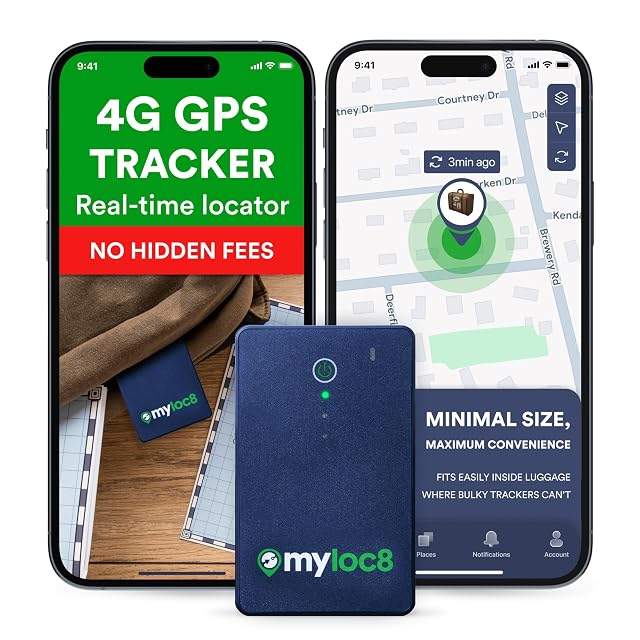
MYLOC8 MYLC005 4G GPS luggage tracker
The one device on this shelf that genuinely knows where it is without borrowing a stranger's phone — and the one that needs a data plan, works on Android, and tells you when your bag is opened.
This is the odd one out on the shelf and the reason this hub’s introduction draws the distinction it does. Seven of the eight devices here are Apple Find My tags: they have no idea where they are, and they do not need to — they broadcast an identifier, somebody else’s iPhone overhears it and reports the position, and you see a pin on a map. In a crowded terminal that is better than GPS. On an empty road, in a locked overnight warehouse or in a country where nobody near your bag owns an iPhone, it reports nothing at all.
This one takes its own satellite fix and sends it over 4G. That means it works where there are no crowds, works on Android as well as iOS, and does things no Find My device can: geofencing, location history, multi-device tracking. It also means a paid subscription, which the product title states rather than hides, and about five days of battery against six months to a year for the tags on this shelf — roughly seventy times less, and the direct cost of a radio that transmits instead of whispering.
The feature nobody else here has is the light sensor. It tells you when the suitcase is opened. Tracking answers “where is my bag”; this answers “has somebody been in it”, which is a different and sometimes more useful question — and the only comparable thing in this hub is a mechanical open-alert indicator on one of the TSA locks on the lock shelf.
The specification is the most complete on the shelf: 800 mAh published, both battery figures published, IP67 rather than a spray rating, an automatic flight mode, and the observation that an 800 mAh cell sits far inside the 100 Wh cabin limit that governs the power banks on the shelf next door. What is absent is any dimension or weight, and any sound alert — so it will tell you the bag is in this building and not which cupboard.
Availability
Read on the day this page was built: $25 at the American Amazon shop.
Read from Keepa on the day this page was last revised; stock and price both move without notice.
Prices quoted in this text were read on 2026-10-07. The live price is at the top of the page.
What travelers ask
Why pay a subscription when seven devices here do not?
Because you are paying for a phone connection rather than borrowing other people's. A Find My tag has no idea where it is: it shouts a Bluetooth identifier and waits for a passing iPhone to report the position, which works brilliantly in a terminal and not at all in an empty valley or a locked warehouse at night. This device takes its own satellite fix and sends it over 4G, so it works wherever there is cellular coverage and nobody else at all. The subscription is the cost of that connection, and the title says so.
What does the opening alert do?
A light sensor inside the bag notices when the lid opens and tells you. Nothing else on this shelf offers it, and it answers a question tracking cannot: a tracker tells you your bag is in the right city, and this tells you somebody has been inside it. For a checked bag that arrives late, knowing whether it was opened is where the conversation with the airline starts — and on this hub's lock shelf one lock does the same job mechanically, with a red indicator that appears once a screener has opened it.
Is five days of battery a problem?
It depends on the trip. Five days on average, up to fourteen in save mode, against six months to a year for the rechargeable Find My tags on this shelf — a difference of roughly seventy times, and it is the direct consequence of the technology: a satellite fix and a cellular upload cost real power, while a Bluetooth beacon costs almost none. For a two-week holiday it needs charging at the hotel. For a bag in long-term storage or a trailer left for a month, it is the wrong tool, and the page is honest enough to publish both figures.