The only listing here that explains how a roll bag works
ALMING 222 roll compression bags, 12-pack
The one set on this shelf that describes its own mechanism step by step — the clip, the zip, the roll and the one-way vent at the bottom.
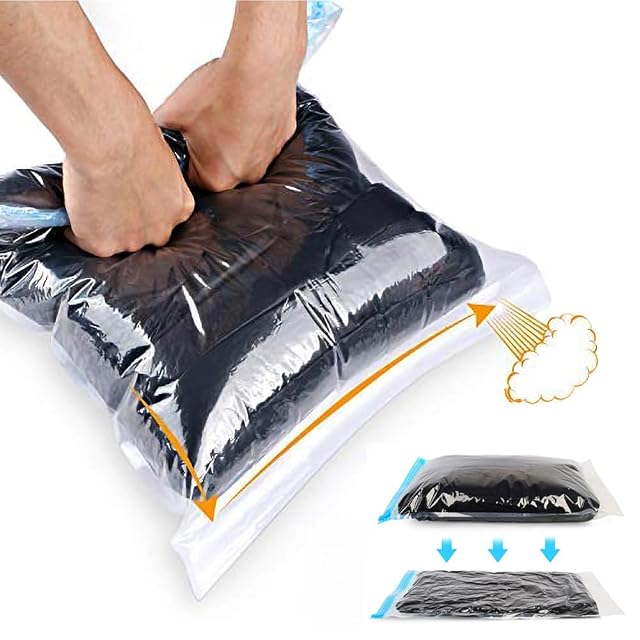
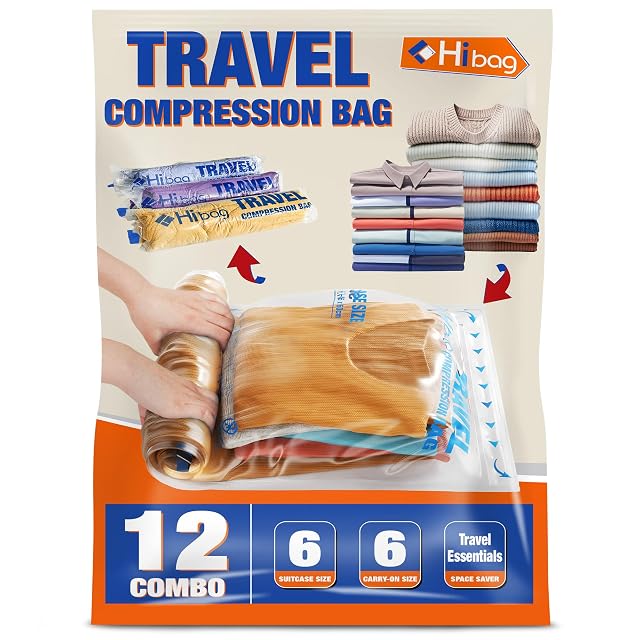
Of the seven sets in the American half of this hub, this is the only one that explains what it does. Clothes in; slide the included clip along the double zipper until the opening is fully sealed; roll the bag downwards from the opening to the base; the air leaves through a one-way vent at the bottom. Each of those four steps matters, and the vent matters most — it lets air out under the pressure of the roll and does not let it back in when you stop, which is the difference between a compression bag and a sealed bag full of air you have merely moved around.
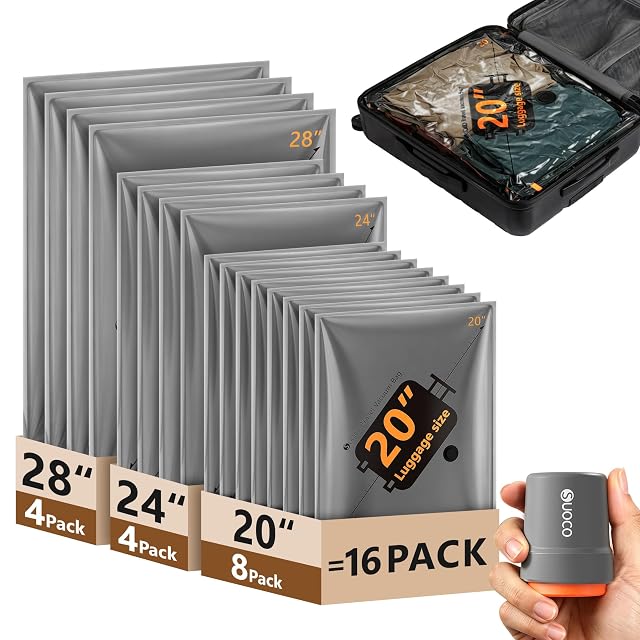
It is also the better specified of the two roll sets here. Both sizes published in inches, 20 by 16 and 24 by 16, where the cheaper set gives “M” and “L” and nothing else. The material named: PA+PE, a nylon-polyethylene laminate where the nylon resists punctures and the polyethylene makes the seal. A clip supplied rather than left to your fingers.
The claim is worth a second look because of how it is phrased. “More than 75 per cent” is a floor, where everything else on this shelf says “up to” — a ceiling. Neither figure is measured and neither cites a method, but a minimum is a claim that can be failed and a maximum is not. On a shelf whose numbers run between 70 and 80 per cent for both mechanisms, that is the more useful distinction.
Two things to note. The title says no vacuum pump or air extractor is needed, and three of the five bullets then call these “vacuum storage bags” — the same confusion the cheaper roll set on this shelf makes, on the one distinction the introduction to this page is built around. And the sliding clip, which is the part that makes the zip seal properly, is a small loose component on a product you will use twice a year. No film thickness is published here or anywhere else on this shelf, and nothing says how many compression cycles the vent is good for, which is the third thing this hub compares.
Availability
Read on the day this page was built: $11 at the American Amazon shop.
Read from Keepa on the day this page was last revised; stock and price both move without notice.
Prices quoted in this text were read on 2026-10-07. The live price is at the top of the page.
What travelers ask
How does a roll bag actually get the air out?
This is the only listing on the shelf that tells you, and it is worth reading because the order of operations is the whole thing. You put the clothes in, slide the included clip along the double zipper until the opening is fully sealed, and then roll the bag downward from the opening towards the base — which pushes the air through a one-way vent at the bottom. The vent is what makes it work: it lets air out under pressure and not back in when you stop rolling. Without that, rolling a sealed bag just moves the air about inside it.
Is "more than 75 per cent" better than "up to 80 per cent"?
It is a differently shaped claim, and the shape is the interesting part. "Up to 80 per cent", which the bag beside this one on this shelf claims, is a ceiling: the best case. "More than 75 per cent" is a floor: the worst case. Neither is measured and neither cites a method, but a maker who writes a minimum is making a claim that can be failed, and one who writes a maximum is not. On a shelf where the figures run from 70 to 80 per cent across both mechanisms, that difference in wording is more informative than the five points between them.
Why does the material matter?
Because these bags fail by leaking, and the film is what leaks. PA+PE is a nylon-polyethylene laminate: the nylon gives puncture resistance and the polyethylene gives the seal. Four of the seven sets on this shelf name it, one names PVC — which is stiffer and less forgiving in the cold — and two name nothing at all. What none of them publishes, including this one, is the film thickness, which is the figure that would actually tell you how many trips a bag survives.